When I began building The Shadow Players universe, one character demanded to arrive first. Not because she drives the plot, and not because she represents the Kin, she doesn’t, but because she is the only being who stands completely outside their journey. She is not their guide, their mentor, or their spiritual compass. She exists for one purpose only: to translate the Shadow Players’ messages.
Before the Player can understand the Strata, the Veil, the Kin, or even themselves, they must meet the one figure who stands beside the Shadow Players rather than among the Kin.
Who is The Mother Of Shadows
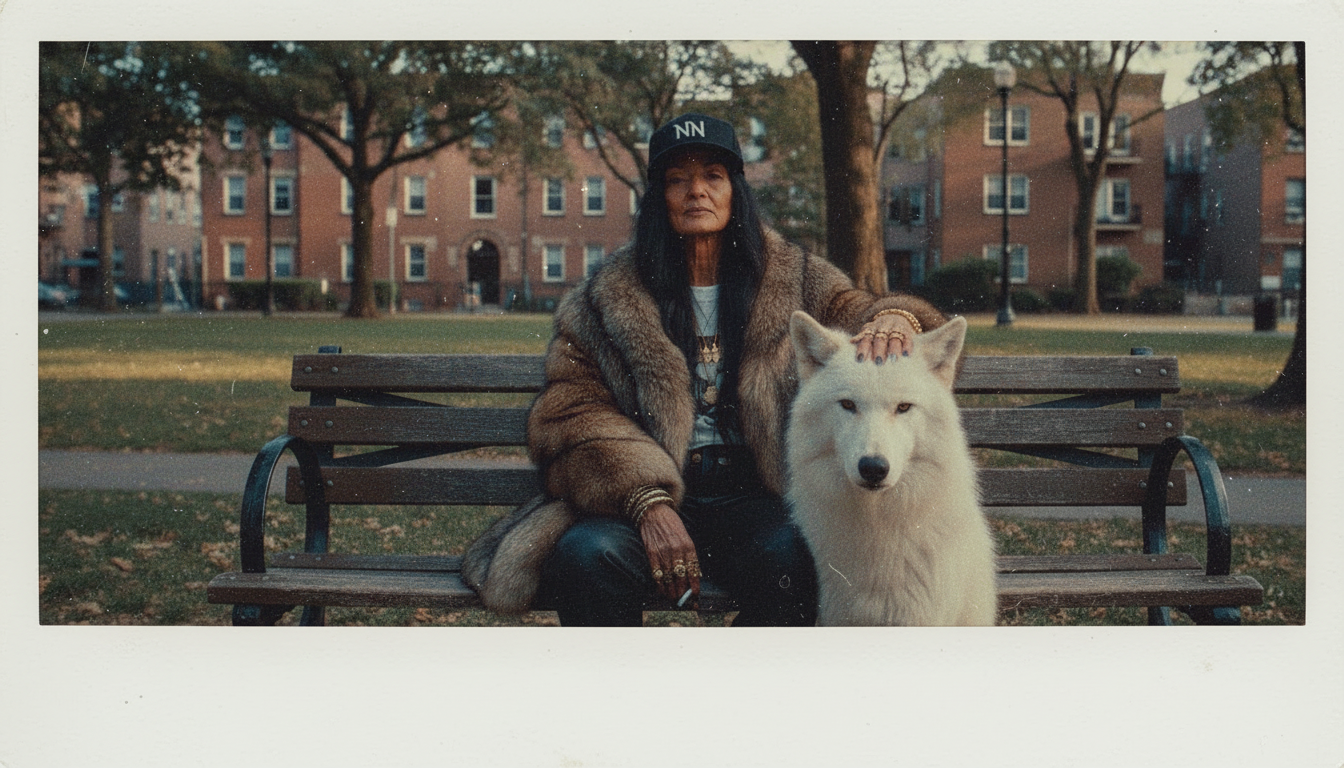
The Mother does not help the Kin on their quest, nor does she advise them on how to proceed. Her allegiance is not to the human Players but to the Shadow Players, the source code of natural order. She is their custodian, the keeper of their symbolism, the translator of their transmissions. When a Player encounters a Shadow Player in the game, whether in animal form, symbol, repetition, or dream, the Mother is the one who can reveal what that encounter means, yet never what the Player should do with it. She is neutral.
I didn’t create her as a guide or a prophet. I created her as the only voice in the game that cannot be rewritten. She is the Elder who stands at the threshold of The Strata, neither deity nor oracle, neither savior nor counselor. She is the custodian of the meaning encoded within the Shadow Players themselves, the keeper of their symbolic lexicon, and the last remaining translator who can articulate their messages without distortion. And that distinction matters.
Unlike the archetypal Elders who appear across mythic universes, Obi-Wan Kenobi guiding Luke toward destiny, Gandalf shepherding the Fellowship through each threshold, Morpheus teaching Neo how to see the Matrix, the Mother of Shadows breaks entirely from this lineage. Traditional mentors exist to steer their student, to nudge them toward the “right” choice, to correct their course when they falter. The Mother does none of this and its one of the reason’s I’m so attached to her as a character. She does not guide, intervene, or influence the path of any Kin. Her role is not to shape a Player’s destiny but to translate the Shadow Player’s transmission. She is the custodian of meaning, not direction. Where other mentors instruct, she interprets. Where others protect, she passes on messages. Her neutrality is her power, and her refusal to guide is the very thing that keeps the integrity of the game intact.
Why is she the first character?
Within the lore of the game, The Mother is the first point of orientation. Before the Player learns anything about the structure of reality, they encounter the one being who has outplayed the game rather than escaped it. She is the only Kin to retain her original Source Code and the only one who remains fully impervious to the Veil’s attempts to rewrite or corrupt her. Most importantly, she is the sole human-form presence trusted and recognised by the Shadow Players themselves.
Many Kin have outplayed the game. Only she was chosen due to her proven loyalty to the animal realm.
Her sovereignty is not rooted in power, morality, or wisdom, but in purity of her role—an unaltered alignment with the natural laws that existed long before the Veil infected the system. Because of this, she becomes the only safe conduit for the cryptic symbols and transmissions sent by the Shadow Players, and for the records that existed before corruption altered the landscape of the game.
In a world where anything can lie, she is the one thing that cannot.
Creating the Mother of Shadows.
The Mother wasn’t generated solely by AI via a prompt. Like all my characters, she was illustrated, prompted and re-designed slowly, over months of sketching, drafting, reworking, and studying the contours of a presence my imagination was holding onto. I always knew she would appear as an elder, one whose lineage carried the visual resonance of mixed Indigenous heritage. That was how she first appeared to me in imagination: grounded and unmistakably connected to the natural order the Shadow Players protect.
From the very beginning, it was evident that her chosen guide, her companion Shadow Player, would be the Wolf. This made perfect sense, as Wolf was always written into the original architecture of the game as the primary guardian, the keeper of natural order. Their pairing was never a conscious decision so much as an inevitability; she and the Wolf arrived together, as if they had always been walking beside one another.
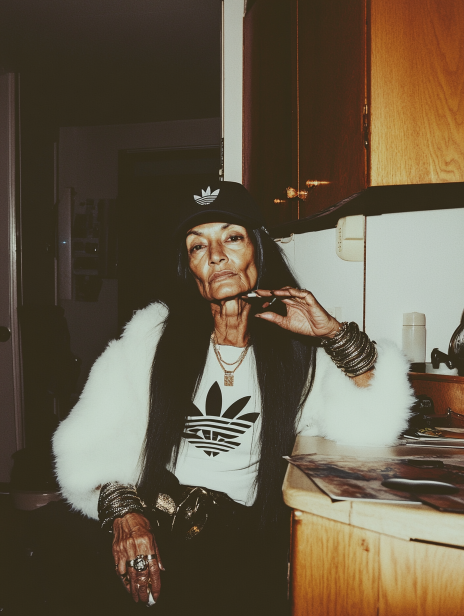
One thing that was on purpose was her visual style. The expected trope of the elder master, etheric, robed, adorned in ceremonial dress, never suited the authority I wanted her to hold. Her presence felt more aligned with someone who has walked through real-world grit, who has seen cities change, who carries the authority of lived experience rather than performative mysticism.
Her choice of urban street fashion became a natural extension of her identity, not an aesthetic decision. Her sportswear, caps, furs, and jewelry gave her a street presence far greater than robes ever could. She is not a spiritual caricature or an untouchable mystic; she is a woman who has outplayed the game through endurance and clarity, and who wears her worldliness with the same ease as she carries the laws.
This blend, elder, Indigenous-coded, aligned with Wolf, and clothed in the language of the streets, became the final expression of her character. It is the form in which she holds her power, her neutrality, and her unwavering role as the translator of the Shadow Players. I became so obsessed with her character structure, her story, her voice and her role within the game, she was my phone screen saver for months. her detachment actually became comforting when building out the lore or the game.