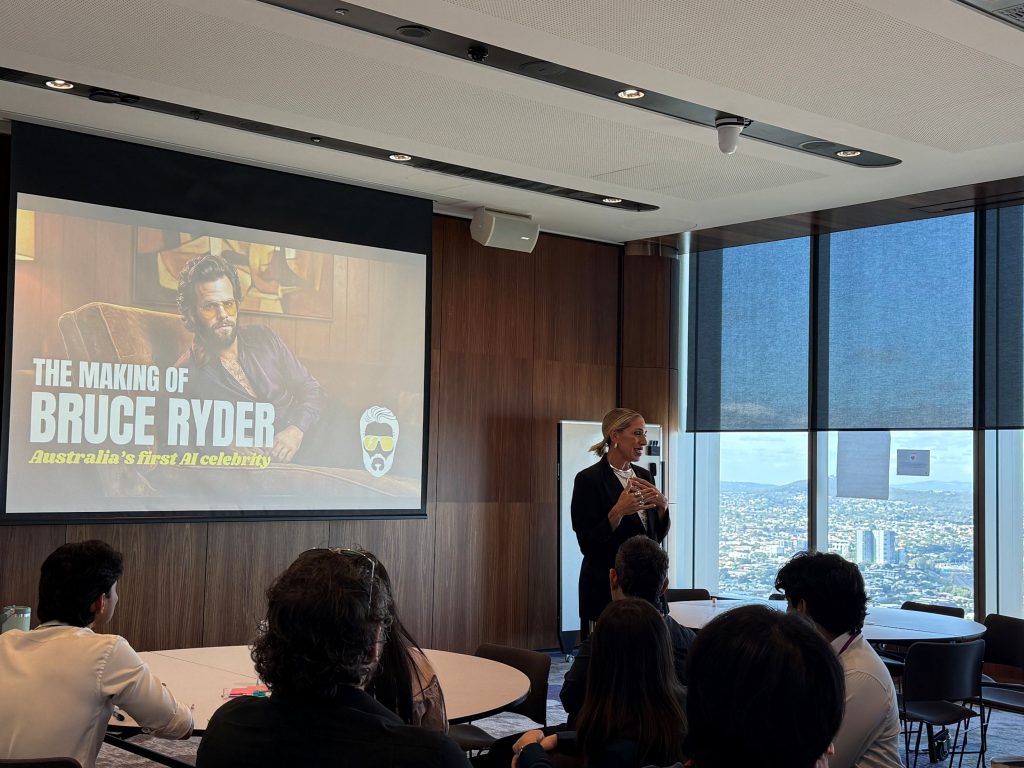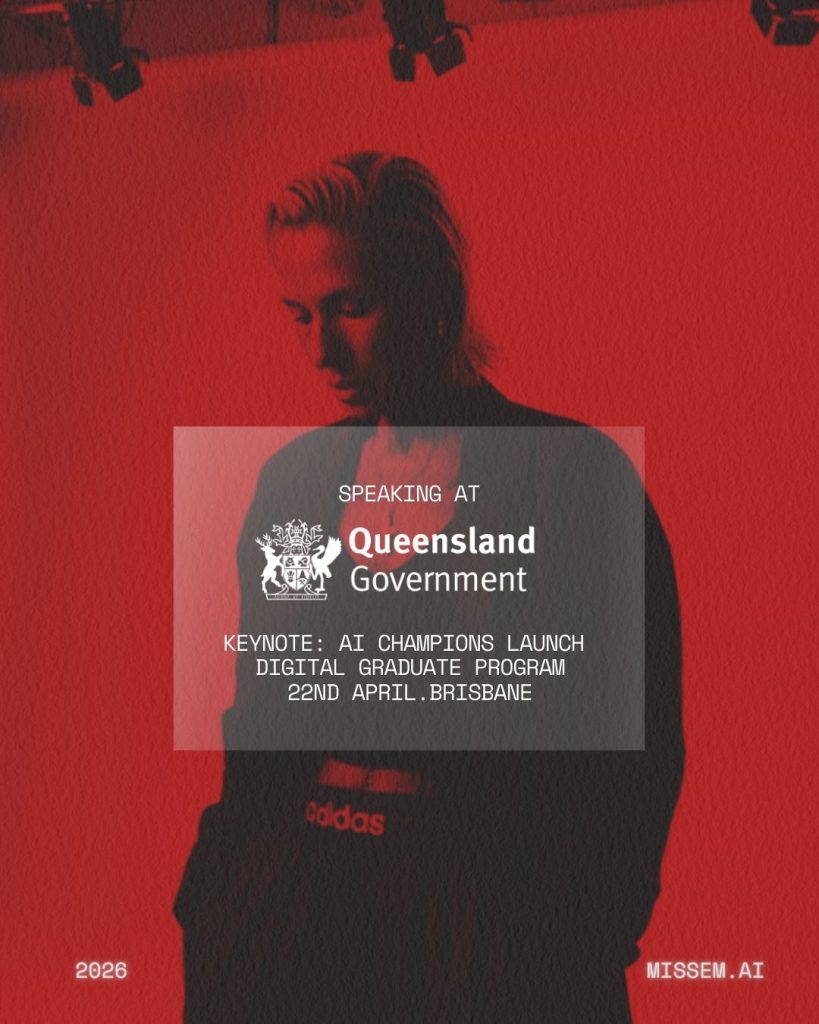
Emma Barbato recently delivered the keynote for graduates of the Queensland Government’s AI Champions program, part of the Digital Graduate Program, standing in front of the next wave of AI technologists entering the workforce.
Emma describes feeling three things at once: excitement, responsibility, and the sheer weight of what lies ahead for that generation. She was asked to share the two-year journey behind building Bruce Ryder, an interactive hyperfiction narrative built in real time but was careful not to present it as simply a fun AI character. Underneath Bruce sits story architecture, identity, UX and distribution decisions, all built the hard way. Her core message to the room was direct: AI hasn’t created a shortcut for the craft. Nothing can.
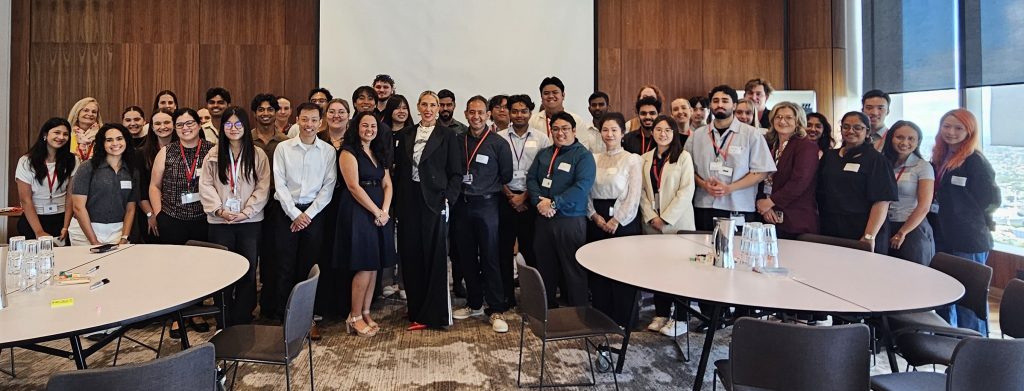
Standing in front of that group surfaced a tension Emma hadn’t fully named before. This generation has access to the most powerful creative tools ever available but tools don’t teach the architecture of world-building. Without that grounding, she argues, the outcome isn’t a new era of storytelling. It’s an influx of volume at speed, a sea of disposable narratives built for the length of a 90-second scroll. And when that happens, the industry will end up blaming the technology, rather than the absence of craft underneath it.
Emma is genuinely grateful for any speaking invitation she believes in-person events supercharge the transfer of knowledge in a way digital formats simply can’t replicate. But this one carried particular weight. Keynoting for the Digital Graduate Program gave her a rare window to throw light into what can feel like a darkening room for young people entering the workforce a generation bombarded with doom-and-gloom messaging about AI and their future.
Her message to them was simple: that framing isn’t the full picture. For creative young people, the playing field has never been more level, equal, or ready for talent to walk through the door.