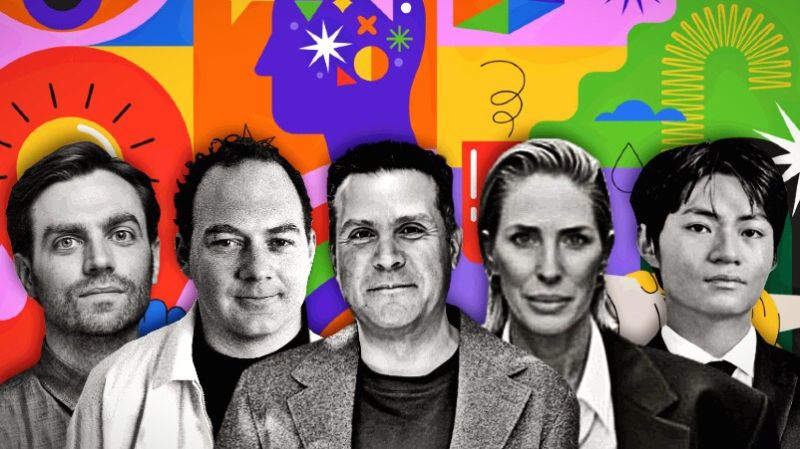
Emma Barbato Creator of Bruce Ryder, has been featured in Mi3 Australia, in a story by Andrew Birmingham examining Australia’s first AI film festival and what it revealed about the medium: that talent, not tools, is what actually delivers results. The piece placed Emma and Bruce Ryder alongside fellow honourees Bruce Hunt, Levi Nguyen, Lucio Ribeiro and Luke Heemsbergen, under the headline “Good News for Creatives” — a study showing that intention, judgement, and hundreds of iterated prompts are what separate a convincing AI project from a generic one.
Emma’s section of the story centres on a problem she didn’t expect to be the hardest part of building Bruce Ryder: getting a predominantly US-trained AI model to produce something that read as authentically Australian, rather than generic or quietly Americanised. The technology made building a fictional character dramatically cheaper and opened creative doors that would have been out of reach with conventional production. But producing a believable Australian character turned out to be far harder than producing a believable human at all.
As Emma told Mi3, the default output kept skewing wrong too polished, too American when what she needed was something else entirely: Gold Coast Australia, 1970s. Rather than accept what the model handed her, she and her team spent months feeding it Australian references, building custom environments, and engineering an authentically Australian voice, because the model simply didn’t know how to do it on its own. Bruce ended up as a combination of hand-drawn artwork, AI generation, and an enormous amount of dedicated work on his voice.
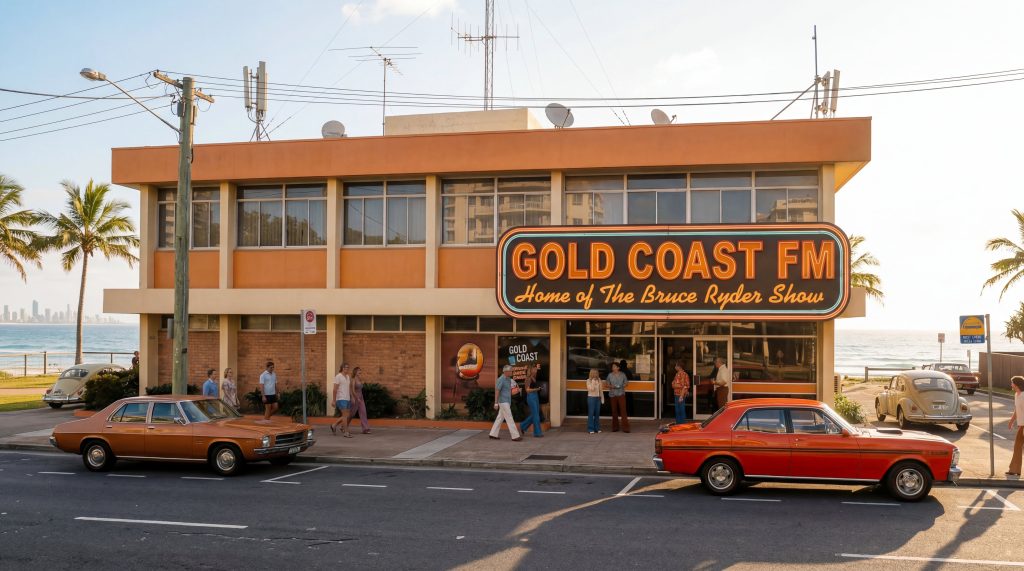
That extra effort turned out to matter for more than authenticity. Emma explained to Mi3 that the process — because it involved so much original, human-made input — is part of what allowed her to copyright and trademark Bruce as a character in the first place. By her estimate, Bruce is roughly 70% human-made. He isn’t AI; he was finished with AI. The original concept was hand-drawn, and his voice was built from twelve contracted human voices layered with her husband’s voice as the base core — nothing pulled off the shelf.
It was necessity that forced the invention. The models simply couldn’t produce an authentic Australian accent, and the more specific texture of how Australians actually talk — the cadence, the pacing, the very particular way Australians swear — was something no model had been trained to replicate. Teaching it that was, as Emma puts it, where the real work lived.
Read the full story on Mi3 Australia: Good News for Creatives: A Study of Australia’s First AI Film Festival Reveals Talent Trumps Tools.