
A genre of storytelling that doesn’t tell, it adapts. Born from a few pioneers of the ’80s and now pierced into the zeitgeist by the tools of generative AI, hyperfiction is the narcotic that keeps me writing and weaving into the early hours of the morning and the future of story. We are witnessing it firsthand with the rise of interactive AI influencers, celebrities, and gaming characters.
Don’t worry, most people don’t recognize it, not because it’s hidden, but because it doesn’t look like anything they’ve seen before. We’re only familiar with absorbing stories in books, in films, in three-act arcs and end credits. But what happens when the story talks back? When it updates itself with you? When it learns your name?
“Hyperfiction” isn’t some hype word conjured for intellectual masturbation. It’s a genre with roots in the multi-path digital experiments of the late ’80s: Michael Joyce’s Afternoon, A story (1987), Stuart Moulthrop’s Victory Garden (1991), with over 900 lexia to choose from, allowing readers to explore multiple storylines and perspectives. Now it’s mutating with momentum in 2025.
For my Gen Xers out there, think: choose-your-own-adventure book meets AI simulation. And you are playing a lead role.
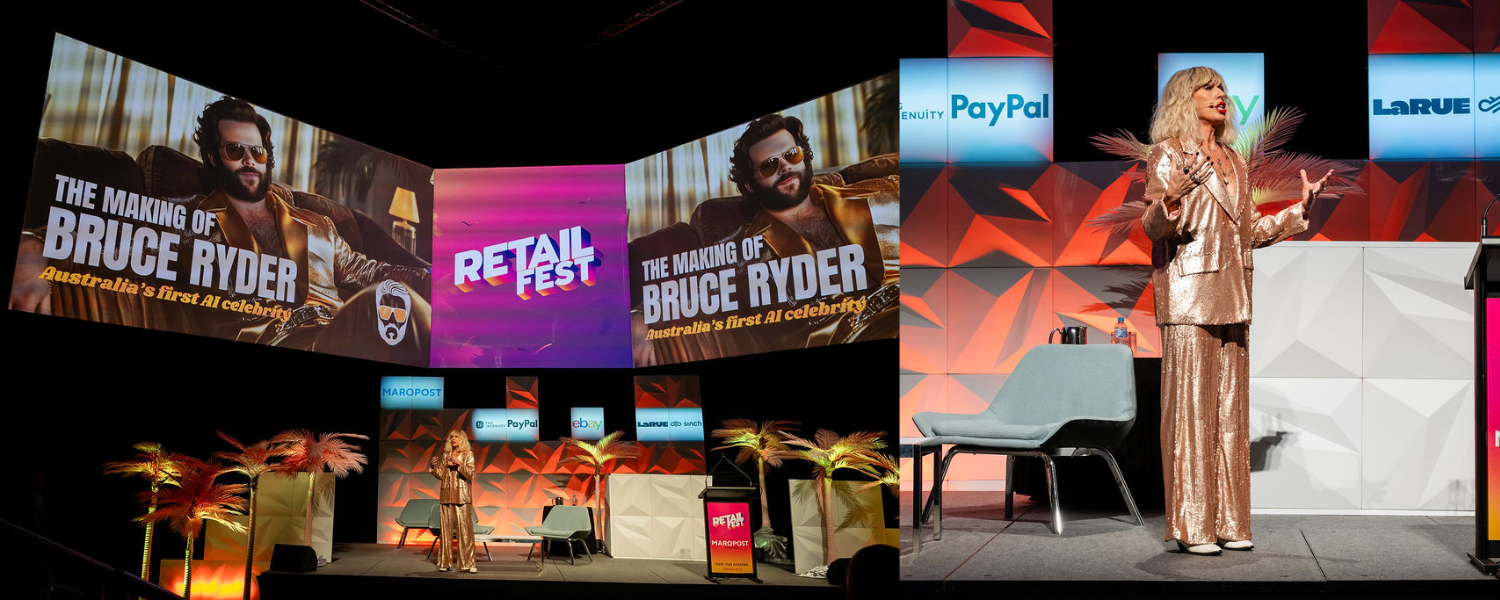
My project WILD CARD, featuring Bruce Ryder, an AI-coded wildcard with a life of his own in the metaverse , doesn’t ask you to just read or watch. It asks you to interact. To co-create. Your presence in his story entirely shifts the plot. Now, with his own radio show featuring interactive elements, we move from fictional content to hyperfiction engagement.

I found myself immersed in what started as a branding exercise for Ducks Nuts Body Co, which later revealed another wall being broken in the storytelling chain. This soon wasn’t about marketing a brand. Nor was it entertainment or cosplay.
This is a story that needs your consciousness to activate it, even when the protagonist is made of silicone.
Hyperfiction breaks the fourth wall—but also the fifth. Remember Ferris Bueller? When he looked straight at us from the screen, it was a shock, right? We felt strangely acknowledged. But we still couldn’t actually change the direction of the story. Later, in Quentin Tarantino’s Kill Bill, the Bride announces her plans to the viewer in the opening scene of the sequel. That was the fourth wall cracking again. Now we often see characters becoming narrators themselves.
Hyperfiction doesn’t stop there. It doesn’t just let you watch, it hands you the pen. What used to be passive consumption becomes active construction, and it’s redefining storytelling as we know it.
90% of our social media feed is “content”, disposable, digestible, and designed for clicks. But this? This requires context and drip-fed storytelling with interactive tactics that invite the viewer to play. That’s why most AI influencers are just good-looking cyber humans in surreal places, soon to become white noise in your feed. Those images aren’t asking anything from you other than to be briefly entertained. Unlike hyperfiction characters who are built with the mechanics of gaming, story, and performance art, all melding with your reality.
It’s strange. And yes, sometimes it may look like people talking to an imaginary friend on the internet. But pause. Watch. It’s blurring the lines and pushing how far we can stretch the concept of story.
In a keynote this year, I mapped the shift: from brand storytelling to narrative as interface. Where linear logic dissolves into non-linear play. Where interaction becomes the architecture that drives what happens next.
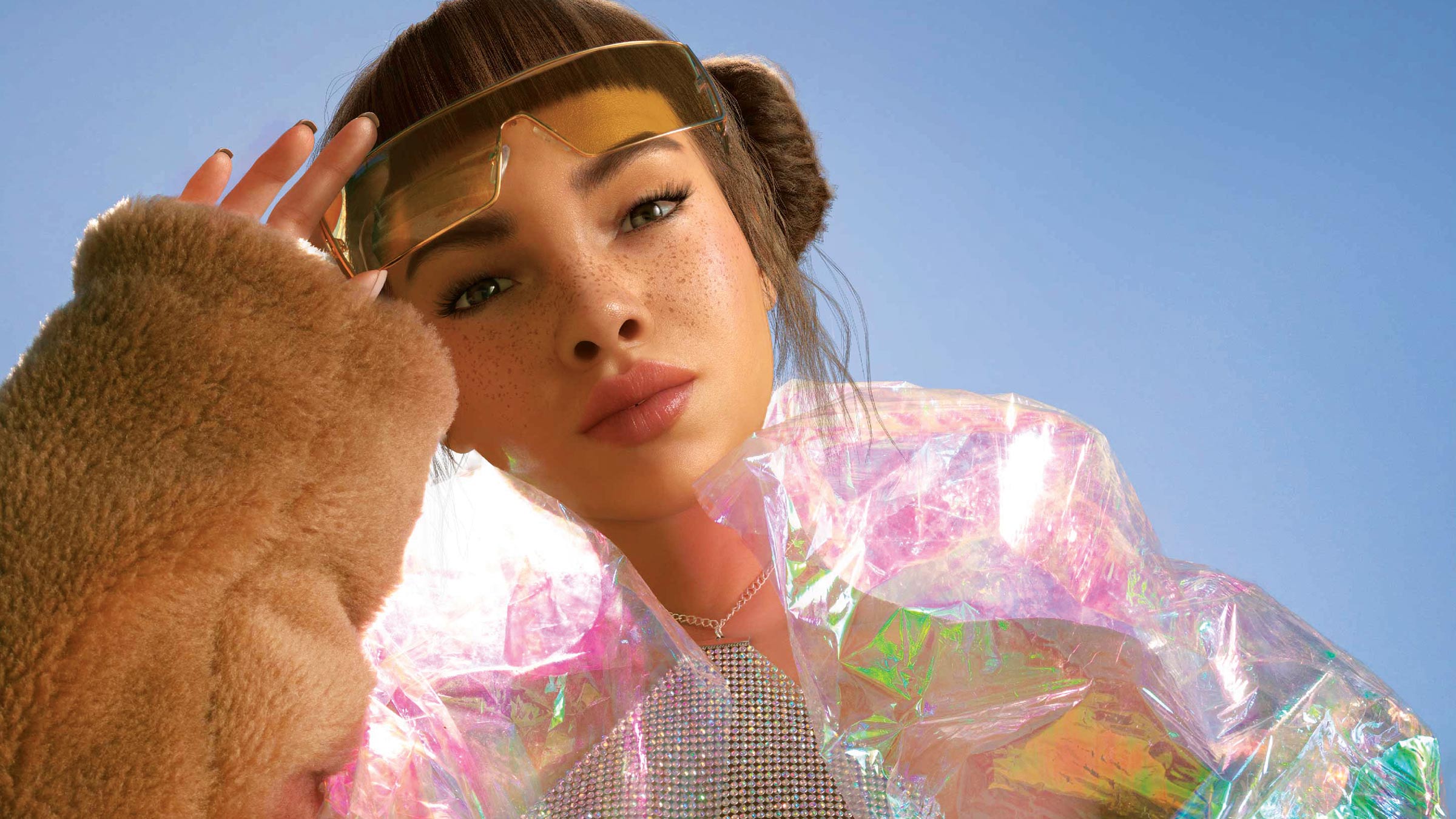
Take Lil Miquela, for instance, a fictional AI character now valued at over $125 million, doing brand deals with Balenciaga, BMW, and Prada. Unlike the parade of pretty AI girls flooding our feeds, Lil came with a storyline. Her followers weren’t just spectators; they had a job. To help her learn how to be human. That’s hyperfiction. She doesn’t offer her followers a story; she offers them a role. She’s not a brand, she’s a quest.
While gamers seem to embrace this new form of interactive storytelling with ease, most people are still trying to wrap their heads around the concept of conversing with an AI. Large language models aren’t just tools, they’re rehearsal spaces for a new kind of interface. We’ve had no pre-conditioned behaviour for this, so we adapt. We either slide into deluded fantasy (hence the rise in people dating or marrying their AI, trust me, it’s coming and I have a whole piece on that), or we learn to balance on the edge, yet open to play.
We’re standing on the threshold of a new Garden of Eden. And while we’ve all been craving original content, never in my wildest dreams did I imagine witnessing the kind of psychological expansion now sitting at our fingertips on the scroll.
Yet here we are, the caterpillars of our own imaginations.